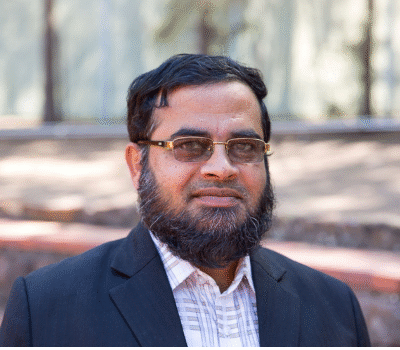
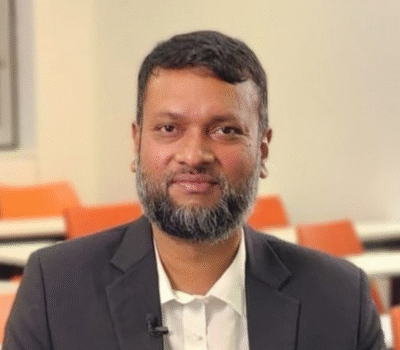
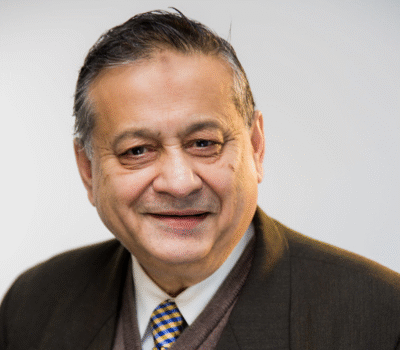
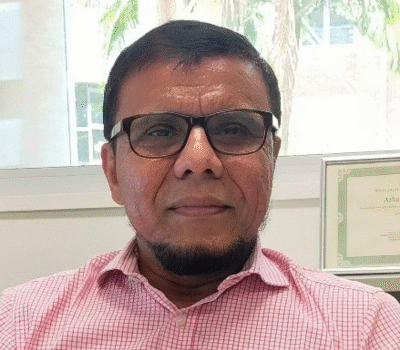
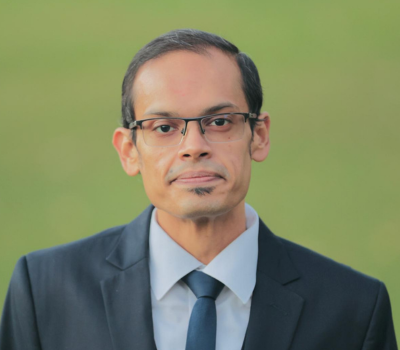
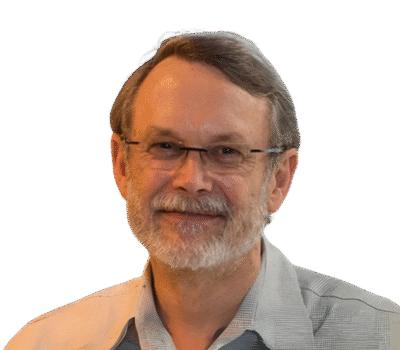
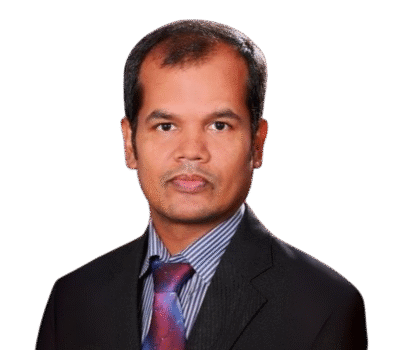
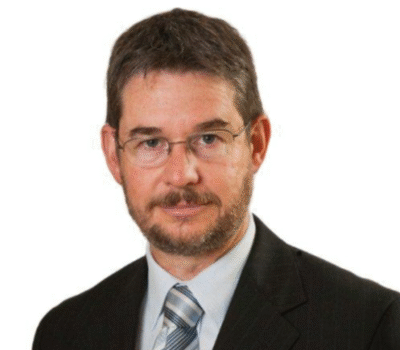
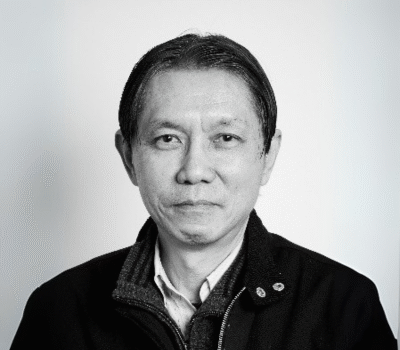
Meet the dedicated individuals guiding Three Zeros Initiatives Australia towards a sustainable and equitable future.
Professor Ataur Rahman is a renowned authority in water, environment, sustainability and climate change. He is a professor in Sustainability Engineering Discipline at Western Sydney University, Australia. He completed his PhD in Water Engineering at Monash University in 1997. His research focuses on flood modelling, rainwater harvesting, climate change, water quality assessment, engineering education and water-sensitive urban design.
He has served as a visiting academic at Cornell University, Masdar University, Vienna University of Technology, INRS Canada and University of New South Wales. He is co-author of the Australian Rainfall and Runoff (national guidelines) and co-developer of the ARR-RFFE tool, which has been used over 10,000 times in Australia for flood risk assessment. He has published over 600 papers.
Listed among the world’s top 2% scientists, he is a Fellow of Engineers Australia and an award-winning PhD supervisor. He has supervised 26 PhD students to successful completion. He is the recipient of the G N Alexander Medal from Engineers Australia.
His work is widely cited, with over 12,000 citations and an h-index of 54.
Professor Rahman has also provided expert consulting to the Government of Qatar, Australian Bureau of Meteorology, Sydney Water, GHD, Gold Coast City Council and Blacktown City Council.
Dr Rafiqul Islam is a distinguished academic at Charles Sturt University, Australia, where he serves as a Professor of Cybersecurity. He is internationally recognised for his research contributions in cybersecurity, with particular expertise in malware analysis and classification, authentication systems, cloud security, privacy in social media, and the Internet of Things (IoT). He has served as the Academic Lead of the Cybersecurity Cooperative Research Centre (CSCRC) at Charles Sturt University, where he led the cybersecurity research team and contributed to advancing collaborative and industry-driven research initiatives.
Professor Islam has been recognised among the Stanford University–Elsevier World’s Top 2% Scientists and as a Top 1% member of the European Alliance for Innovation (EAI). He has published over 240 peer-reviewed research papers in leading journals and conferences. His excellence has been acknowledged through multiple awards, including the Charles Sturt University Excellence Award, Vice-Chancellor’s Excellence Award, Best Supervisor Award, and Leadership Award. In 2021, he was named Cyber Security Researcher of the Year by the Australian Information Security Association.
Professor Dr. Mahfuz Ashraf is a distinguished academic and leader in Business, Information Systems, and Information Technology, with over two decades of experience in the higher education sector. He currently serves as Dean and Professor at the Lincoln Institute of Higher Education (LIHE) in Sydney, Australia, where he has been instrumental in shaping academic policies, curriculum development, and institutional strategy.
Throughout his career, Dr. Ashraf has been a key driver of educational innovation, playing a significant role in implementing MOOCs and developing industry-affiliated learning programs. He has successfully designed and led Bachelor and Master's programs in IT, Business, Entrepreneurship, and Innovation. His academic qualifications include a Ph.D. in Computing from the University of South Australia and a Master's in Information Systems Management from London South Bank University.
A prolific scholar, Professor Ashraf has authored over 50 publications in top-tier journals and conference proceedings. His work, which has been cited over 700 times, focuses on a range of critical areas, including information systems, health leadership, and ICT for development. He has successfully secured several research grants and is a dedicated mentor, having supervised over 40 research students at the master’s and doctoral levels. He is also the founder and leader of the Australian Journal of Artificial Intelligence Review, a platform dedicated to fostering AI research and innovation.
Emeritus Professor Akhtar Kalam is a globally recognized leader in Electrical Power Engineering, with a career spanning over four decades. As a long-standing member of Victoria University since 1984, he has been lauded for his significant contributions to teaching, research, and professional leadership. He currently holds the position of Academic Director at Texila College Australia and serves as the Editor-in-Chief of the Australian Journal of Electrical & Electronics Engineering.
With over 600 publications and more than 30 books to his name, Professor Kalam is a prolific scholar. His expertise is highly sought after, as he is frequently invited to deliver lectures and oversee external theses internationally. He has also supervised the graduation of over 50 higher-degree research students, demonstrating a deep commitment to mentoring the next generation of engineers.
A registered Professional Engineer in Victoria, Professor Kalam maintains strong ties with the industry, providing expert consultancy to major electrical utilities, manufacturers, and other key organizations. His professional affiliations include being a Fellow of Engineers Australia and IET, and a Life Senior Member of IEEE. His work has been instrumental in securing research grants of approximately $1.5 million over the past five years, solidifying his reputation as a formidable force in both academia and industry.
Professor Azharul Karim is an internationally recognized expert in multiscale and multiphase drying modeling, with a primary research focus on solving critical problems within the food industry. He is currently a Professor in the School of Mechanical, Medical and Process Engineering at Queensland University of Technology (QUT). A highly accomplished researcher, Professor Karim has authored over 288 peer-reviewed articles, including 176 high-quality journal papers and six books. His work has amassed over 11,895 citations, resulting in an impressive h-index of 61.
His research's global impact is highlighted by an overall Field Weighted Citation Index (FWCI) of 2.09, and his papers are frequently ranked among the top 10% most cited worldwide. A dedicated mentor, he has successfully supervised 25 Ph.D. and nine M.Phil. students to completion and is currently guiding eight more.
Professor Karim’s influence extends beyond academia, as he has been a keynote speaker at 25 international conferences and has given invited seminars at prestigious universities globally, including Oxford University and the National University of Singapore. He founded the Advanced Drying and Sustainable Energy Research (ADSER) group, a multidisciplinary team dedicated to tackling complex challenges at the intersection of engineering, mathematics, and science. His contributions have been supported by over $4.2 million in external grants.
Prometheus Siddiqui is a prominent figure in the global social business movement, with over 15 years of leadership across Asia and Australia. He has worked closely with Nobel Peace Laureate and Former Chief Advisor to the Interim Government of the People’s Republic of Bangladesh, Professor Muhammad Yunus, in advancing social businesses and microfinance initiatives beyond Bangladesh. Prometheus serves on the boards of Grameen Pilipinas Microfinance Inc. and Dana Asia (Australia and Singapore), shaping strategies in financial inclusion, education, and sustainable social businesses. As a former Board Member of Grameen Australia, he played a key role in launching the country’s first Grameen-style microfinance pilot. Earlier in his career, he held senior roles at one of Bangladesh’s largest social business funds. Based in Sydney since 2014, he currently works as Commercial Manager at Brockman Engineering (a part of the EVZ Group, ASX: EVZ), advising major infrastructure projects nationwide. Prometheus also lectured at Victoria University and other academic institutions in Sydney. His work reflects a deep commitment to social business, microfinance, social innovation, responsible business, and poverty eradication through entrepreneurial solutions.
Dr. Roger Hadgraft is an esteemed Honorary Professor (retired) with a distinguished 30-year career dedicated to innovation in engineering education. A civil engineer by training, he has been a driving force behind curriculum renewal at several leading Australian universities, including Monash, RMIT, Melbourne, and the University of Technology Sydney (UTS).
Dr. Hadgraft is a pioneer of project-based learning (PBL), successfully implementing it across various engineering programs. At RMIT, he was a key figure in redesigning curricula around sustainability, a concept he further championed by establishing a Master of Sustainable Practice and a Bachelor of Sustainable Systems Engineering. His work culminated at UTS, where as Professor and Director of Educational Innovation, he spearheaded a major curriculum renewal that embedded a studio-based approach into both undergraduate and postgraduate engineering and IT programs. These studios fostered student career development while centering on project-based work.
A recognized national and international leader, Dr. Hadgraft has contributed to significant projects defining and assessing graduate outcomes, including the ALTC Academic Standards Project and the OECD's AHELO project. His extensive experience in staff development and quality assurance, combined with his research on curriculum architecture and student motivation, has profoundly impacted modern engineering education. His most recent publication is the open-access book, Reshaping Engineering Education: Addressing Complex Human Challenges.
Professor Jahangir Hossain is a distinguished academic and researcher with over two decades of experience in Renewable Energy Integrations. Specializing in Wind Energy, Power System Analysis, and Power System Planning, he is currently a professor at the University of Technology Sydney's School of Electrical and Data Engineering. His extensive career is marked by his involvement as a principal or co-principal investigator in more than 30 projects, collectively securing over $5 million AUD in funding. These projects were supported by various prestigious organizations, including the Australian Federal and State Governments, the Australian Research Council, and numerous industries.
Dr. Hossain's academic journey includes a Ph.D. in Electrical Engineering from the University of New South Wales and a Master of Science and Bachelor of Science in Electrical and Electronic Engineering from Rajshahi University of Engineering & Technology.
A prolific author and editor, he has published over 400 works, including 5 books and more than 175 journal articles, with his research garnering over 11,000 citations and an h-index of 59 on Google Scholar. His professional leadership includes roles as an Associate Editor for prestigious journals like IEEE Access and as the Chair of the IEEE NSW Power and Energy Chapter. He is also a Senior Member of IEEE. His work continues to shape the future of sustainable energy.
Dr Anthony Ladson has 39 years’ experience in hydrology and water management and has worked on projects throughout Australia and in the US, Taiwan and PNG. He has a PhD from the University of Melbourne and a Master of Science from the University of Minnesota. As well as being a Director of Moroka Pty Ltd, he is an adjunct Associate Professor at Victorian University, Australia. He has published 2 books, 10 book chapters and 141 refereed articles in journals and conferences. His Google Scholar citations are 9927, with an h-index of 27. He worked as a Senior Lecturer at Monash University and Research Fellow at the University of Melbourne. He was a member of National Committee of on Water Engineering in Australia. He is a Fellow of Engineers Australia. He is one of the authors of Australian Rainfall and Runoff (the national guideline).
He has worked extensively on flood hydrology including assessment of flood severity and damage, design and delivery of flood recovery works, joint probability assessments, and hydrologic modelling including estimation of model parameters, areal reduction factors, losses, temporal patterns of rainfall and design flood hydrographs. He has also worked in flood response, providing advice during flood events. He has developed, organised and delivered training courses on flood management to professionals and taught postgraduate flood hydrology units at Melbourne and Monash Universities. He also runs a hydrology blog (https://tonyladson.wordpress.com). In 2005 he received the GN Alexander Medal from Engineers Australia.
Professor Chin Jian Leo is a distinguished civil engineer with extensive experience in geomechanical, geoenvironmental, and infrastructure engineering. His career began in the public works sector in Singapore, where he spent seven years designing and constructing major road infrastructure, including embankments, motorways, and tunnels. He transitioned into academia, earning a Ph.D. from the University of Sydney, and has since become a Professor at Western Sydney University.
Professor Leo's research focuses on a range of critical topics, including soft soils and poromechanics, soil-structure interactions, and the behavior of foundations and retaining structures. His work addresses practical challenges such as the consolidation of soft soils, tunnel closure, and contaminant transport. He also specializes in the characterization of various geomaterials, utilizing a combination of laboratory, field, and computational methods.
A prolific scholar, Professor Leo has authored and co-authored over 100 peer-reviewed journal publications. He is also an active participant in the global engineering community, having served as a keynote speaker at several international conferences and as an advisor to the Hong Kong Institution of Engineers. His expertise and leadership are further demonstrated by his roles as co-chair of the International Conference of Geomechanics and Geoenvironmental Engineering.
Professor Ataur Rahman is a renowned authority in water, environment, sustainability and climate change. He is a professor in Sustainability Engineering Discipline at Western Sydney University, Australia. He completed his PhD in Water Engineering at Monash University in 1997. His research focuses on flood modelling, rainwater harvesting, climate change, water quality assessment, engineering education and water-sensitive urban design.
He has served as a visiting academic at Cornell University, Masdar University, Vienna University of Technology, INRS Canada and University of New South Wales. He is co-author of the Australian Rainfall and Runoff (national guidelines) and co-developer of the ARR-RFFE tool, which has been used over 10,000 times in Australia for flood risk assessment. He has published over 600 papers.
Listed among the world’s top 2% scientists, he is a Fellow of Engineers Australia and an award-winning PhD supervisor. He has supervised 26 PhD students to successful completion. He is the recipient of the G N Alexander Medal from Engineers Australia.
His work is widely cited, with over 12,000 citations and an h-index of 54.
Professor Rahman has also provided expert consulting to the Government of Qatar, Australian Bureau of Meteorology, Sydney Water, GHD, Gold Coast City Council and Blacktown City Council.
Dr Rafiqul Islam is a distinguished academic at Charles Sturt University, Australia, where he serves as a Professor of Cybersecurity. He is internationally recognised for his research contributions in cybersecurity, with particular expertise in malware analysis and classification, authentication systems, cloud security, privacy in social media, and the Internet of Things (IoT). He has served as the Academic Lead of the Cybersecurity Cooperative Research Centre (CSCRC) at Charles Sturt University, where he led the cybersecurity research team and contributed to advancing collaborative and industry-driven research initiatives.
Professor Islam has been recognised among the Stanford University–Elsevier World’s Top 2% Scientists and as a Top 1% member of the European Alliance for Innovation (EAI). He has published over 240 peer-reviewed research papers in leading journals and conferences. His excellence has been acknowledged through multiple awards, including the Charles Sturt University Excellence Award, Vice-Chancellor’s Excellence Award, Best Supervisor Award, and Leadership Award. In 2021, he was named Cyber Security Researcher of the Year by the Australian Information Security Association.
Professor Dr. Mahfuz Ashraf is a distinguished academic and leader in Business, Information Systems, and Information Technology, with over two decades of experience in the higher education sector. He currently serves as Dean and Professor at the Lincoln Institute of Higher Education (LIHE) in Sydney, Australia, where he has been instrumental in shaping academic policies, curriculum development, and institutional strategy.
Throughout his career, Dr. Ashraf has been a key driver of educational innovation, playing a significant role in implementing MOOCs and developing industry-affiliated learning programs. He has successfully designed and led Bachelor and Master's programs in IT, Business, Entrepreneurship, and Innovation. His academic qualifications include a Ph.D. in Computing from the University of South Australia and a Master's in Information Systems Management from London South Bank University.
A prolific scholar, Professor Ashraf has authored over 50 publications in top-tier journals and conference proceedings. His work, which has been cited over 700 times, focuses on a range of critical areas, including information systems, health leadership, and ICT for development. He has successfully secured several research grants and is a dedicated mentor, having supervised over 40 research students at the master’s and doctoral levels. He is also the founder and leader of the Australian Journal of Artificial Intelligence Review, a platform dedicated to fostering AI research and innovation.
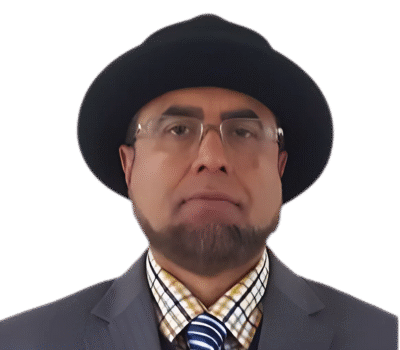
Emeritus Professor Akhtar Kalam is a globally recognized leader in Electrical Power Engineering, with a career spanning over four decades. As a long-standing member of Victoria University since 1984, he has been lauded for his significant contributions to teaching, research, and professional leadership. He currently holds the position of Academic Director at Texila College Australia and serves as the Editor-in-Chief of the Australian Journal of Electrical & Electronics Engineering.
With over 600 publications and more than 30 books to his name, Professor Kalam is a prolific scholar. His expertise is highly sought after, as he is frequently invited to deliver lectures and oversee external theses internationally. He has also supervised the graduation of over 50 higher-degree research students, demonstrating a deep commitment to mentoring the next generation of engineers.
A registered Professional Engineer in Victoria, Professor Kalam maintains strong ties with the industry, providing expert consultancy to major electrical utilities, manufacturers, and other key organizations. His professional affiliations include being a Fellow of Engineers Australia and IET, and a Life Senior Member of IEEE. His work has been instrumental in securing research grants of approximately $1.5 million over the past five years, solidifying his reputation as a formidable force in both academia and industry.
Professor Azharul Karim is an internationally recognized expert in multiscale and multiphase drying modeling, with a primary research focus on solving critical problems within the food industry. He is currently a Professor in the School of Mechanical, Medical and Process Engineering at Queensland University of Technology (QUT). A highly accomplished researcher, Professor Karim has authored over 288 peer-reviewed articles, including 176 high-quality journal papers and six books. His work has amassed over 11,895 citations, resulting in an impressive h-index of 61.
His research's global impact is highlighted by an overall Field Weighted Citation Index (FWCI) of 2.09, and his papers are frequently ranked among the top 10% most cited worldwide. A dedicated mentor, he has successfully supervised 25 Ph.D. and nine M.Phil. students to completion and is currently guiding eight more.
Professor Karim’s influence extends beyond academia, as he has been a keynote speaker at 25 international conferences and has given invited seminars at prestigious universities globally, including Oxford University and the National University of Singapore. He founded the Advanced Drying and Sustainable Energy Research (ADSER) group, a multidisciplinary team dedicated to tackling complex challenges at the intersection of engineering, mathematics, and science. His contributions have been supported by over $4.2 million in external grants.
Prometheus Siddiqui is a prominent figure in the global social business movement, with over 15 years of leadership across Asia and Australia. He has worked closely with Nobel Peace Laureate and Former Chief Advisor to the Interim Government of the People’s Republic of Bangladesh, Professor Muhammad Yunus, in advancing social businesses and microfinance initiatives beyond Bangladesh. Prometheus serves on the boards of Grameen Pilipinas Microfinance Inc. and Dana Asia (Australia and Singapore), shaping strategies in financial inclusion, education, and sustainable social businesses. As a former Board Member of Grameen Australia, he played a key role in launching the country’s first Grameen-style microfinance pilot. Earlier in his career, he held senior roles at one of Bangladesh’s largest social business funds. Based in Sydney since 2014, he currently works as Commercial Manager at Brockman Engineering (a part of the EVZ Group, ASX: EVZ), advising major infrastructure projects nationwide. Prometheus also lectured at Victoria University and other academic institutions in Sydney. His work reflects a deep commitment to social business, microfinance, social innovation, responsible business, and poverty eradication through entrepreneurial solutions.
Dr. Roger Hadgraft is an esteemed Honorary Professor (retired) with a distinguished 30-year career dedicated to innovation in engineering education. A civil engineer by training, he has been a driving force behind curriculum renewal at several leading Australian universities, including Monash, RMIT, Melbourne, and the University of Technology Sydney (UTS).
Dr. Hadgraft is a pioneer of project-based learning (PBL), successfully implementing it across various engineering programs. At RMIT, he was a key figure in redesigning curricula around sustainability, a concept he further championed by establishing a Master of Sustainable Practice and a Bachelor of Sustainable Systems Engineering. His work culminated at UTS, where as Professor and Director of Educational Innovation, he spearheaded a major curriculum renewal that embedded a studio-based approach into both undergraduate and postgraduate engineering and IT programs. These studios fostered student career development while centering on project-based work.
A recognized national and international leader, Dr. Hadgraft has contributed to significant projects defining and assessing graduate outcomes, including the ALTC Academic Standards Project and the OECD's AHELO project. His extensive experience in staff development and quality assurance, combined with his research on curriculum architecture and student motivation, has profoundly impacted modern engineering education. His most recent publication is the open-access book, Reshaping Engineering Education: Addressing Complex Human Challenges.
Professor Jahangir Hossain is a distinguished academic and researcher with over two decades of experience in Renewable Energy Integrations. Specializing in Wind Energy, Power System Analysis, and Power System Planning, he is currently a professor at the University of Technology Sydney's School of Electrical and Data Engineering. His extensive career is marked by his involvement as a principal or co-principal investigator in more than 30 projects, collectively securing over $5 million AUD in funding. These projects were supported by various prestigious organizations, including the Australian Federal and State Governments, the Australian Research Council, and numerous industries.
Dr. Hossain's academic journey includes a Ph.D. in Electrical Engineering from the University of New South Wales and a Master of Science and Bachelor of Science in Electrical and Electronic Engineering from Rajshahi University of Engineering & Technology.
A prolific author and editor, he has published over 400 works, including 5 books and more than 175 journal articles, with his research garnering over 11,000 citations and an h-index of 59 on Google Scholar. His professional leadership includes roles as an Associate Editor for prestigious journals like IEEE Access and as the Chair of the IEEE NSW Power and Energy Chapter. He is also a Senior Member of IEEE. His work continues to shape the future of sustainable energy.
Dr Anthony Ladson has 39 years’ experience in hydrology and water management and has worked on projects throughout Australia and in the US, Taiwan and PNG. He has a PhD from the University of Melbourne and a Master of Science from the University of Minnesota. As well as being a Director of Moroka Pty Ltd, he is an adjunct Associate Professor at Victorian University, Australia. He has published 2 books, 10 book chapters and 141 refereed articles in journals and conferences. His Google Scholar citations are 9927, with an h-index of 27. He worked as a Senior Lecturer at Monash University and Research Fellow at the University of Melbourne. He was a member of National Committee of on Water Engineering in Australia. He is a Fellow of Engineers Australia. He is one of the authors of Australian Rainfall and Runoff (the national guideline).
He has worked extensively on flood hydrology including assessment of flood severity and damage, design and delivery of flood recovery works, joint probability assessments, and hydrologic modelling including estimation of model parameters, areal reduction factors, losses, temporal patterns of rainfall and design flood hydrographs. He has also worked in flood response, providing advice during flood events. He has developed, organised and delivered training courses on flood management to professionals and taught postgraduate flood hydrology units at Melbourne and Monash Universities. He also runs a hydrology blog (https://tonyladson.wordpress.com). In 2005 he received the GN Alexander Medal from Engineers Australia.
Professor Chin Jian Leo is a distinguished civil engineer with extensive experience in geomechanical, geoenvironmental, and infrastructure engineering. His career began in the public works sector in Singapore, where he spent seven years designing and constructing major road infrastructure, including embankments, motorways, and tunnels. He transitioned into academia, earning a Ph.D. from the University of Sydney, and has since become a Professor at Western Sydney University.
Professor Leo's research focuses on a range of critical topics, including soft soils and poromechanics, soil-structure interactions, and the behavior of foundations and retaining structures. His work addresses practical challenges such as the consolidation of soft soils, tunnel closure, and contaminant transport. He also specializes in the characterization of various geomaterials, utilizing a combination of laboratory, field, and computational methods.
A prolific scholar, Professor Leo has authored and co-authored over 100 peer-reviewed journal publications. He is also an active participant in the global engineering community, having served as a keynote speaker at several international conferences and as an advisor to the Hong Kong Institution of Engineers. His expertise and leadership are further demonstrated by his roles as co-chair of the International Conference of Geomechanics and Geoenvironmental Engineering.
Our Board of Directors is committed to upholding the highest standards of governance, transparency, and accountability in all our operations. They work diligently to ensure that Three Zeros Initiatives Australia effectively pursues its mission and adheres to its constitution.
For detailed information on our governance structure and principles, please refer to our Constitution.